
Tuesday, 1 January 2013

Friday, 21 December 2012
Dungamal (Chhatragarh), Odisha, INDIA
Dungamal (Chhatragarh) (Oriya: ଡୁଂଗ ମାଳ) is a census town 7 km from Balugaon NAC (nearest railway station Chilka Rly. Station and which last village of Chilka Block towards south. also important for Basic Training Center of India Navy (INS CHILKA).

Presently new private medical opened (ABHA HOSPITAL) in Khordha district in the state of Orissa, India. In ancient time it was a fort of Khurdagarh under Banpur King BanaSur. To protect the kingdom, it was created a big canal linked to lake Chilka to Mountain Bhaleri. Now it is situated besides the village Dungamal(Chhatragarh)

Near to Ava Hospital There is a Big Jagannath Temple, Guru Dwara, Beside one Masjid & Church also newly constructed here. this is small area but all India people staying due to Defense establishment INS CHILKA (Basic Training Centre of Indian Navy.

This area is well connect to Bhubaneswar capital city (97 km) & Berhempur silk city to Orissa by road NH-5(Bus Stop Naval Chhaka & Rail way EcoR (Chilka station). now new Balugaon Bypass road NH-5 connected point here.

This village has U.G.M.E School( Chhatra U.G.M.E School, Std- 1 to 8th class) under chilka Block of Khurda. OTDC Pranthanibas is very good Hotel. Beside Pranthanibas many more Hotels are also available.

Tourist can have a nice time on boat on Chilika Lake and enjoy 3-4 days vacation.
Source : Wikipedia, the free encyclopedia
Sunday, 16 December 2012
Dhauli - Shanti Stupa at Dhauligiri
Dhauli (Oriya: ଧଉଳି) hills are located on the banks of the river Daya, 8 km south of Bhubaneswar in Orissa (India). It is a hill with vast open space adjoining it, and has major Edicts of Ashoka engraved on a mass of rock, by the side of the road leading to the summit of the hill. Dhauli hill is presumed to be the area where Kalinga War was fought.

Ashoka had a special weakness for Dhauli, where the battle was fought. The Daya river is said to have turned red with the blood of the many deceased after the battle, and enabled Ashoka to realize the magnitude of horror associated with war.

He saw to it that Dhauli became an important center of Buddhist activities. He built several chaityas, stupas and pillars there. He got abodes excavated for the recluse, instructions inscribed for officials, expounded the main principles of dandaniti for the public, provided special status to his new kingdom including the stupas at Dhauli.

The Rock Edicts found here include Nos. I-X, XIV and two separate Kalinga Edicts. In Kalinga Edict VI, he expresses his concern for the "welfare of the whole world". The rock-cut elephant above the Edicts is the earliest Buddhist sculpture of Orissa. The stone elephant shows the animal's foreparts only, though it has a fine sense of form and movement. It has another significance, which is related to earth in form of an elephant, and to that extent, elephant probably represented the Buddha to devotees.

On the top of the hill, a dazzling white peace pagoda has been built by the Japan Buddha Sangha and the Kalinga Nippon Buddha Sanghain the 1970s.

The nearby region also houses Ashokan edicts and possibly a Stupa at Bhaskareshwar temple at Tankapani road as argued by scholars. The Dhauligiri hills also has an ancient Shiva temple which is the place for mass gathering during Shiva Ratri Celebrations.
Source Wikipedia, the free encyclopedia
Tuesday, 4 December 2012


Monday, 12 November 2012

Monday, 5 November 2012
Udayagiri and Khandagiri Caves

Udayagiri and Khandagiri Caves are partly natural and partly artificial caves of archaeological, historical and religious importance near the city of Bhubaneswar in Orissa, India.

The caves are situated on two adjacent hills, Udayagiri and Khandagiri, mentioned as Kumari Parvat in the Hathigumpha inscription. They have a number of finely and ornately carved caves. It is believed that most of these caves were carved out as residential blocks for Jain monks during the reign of King Kharavela. Udayagiri means "Sunrise Hill" and has 18 caves while Khandagiri has 15 caves.
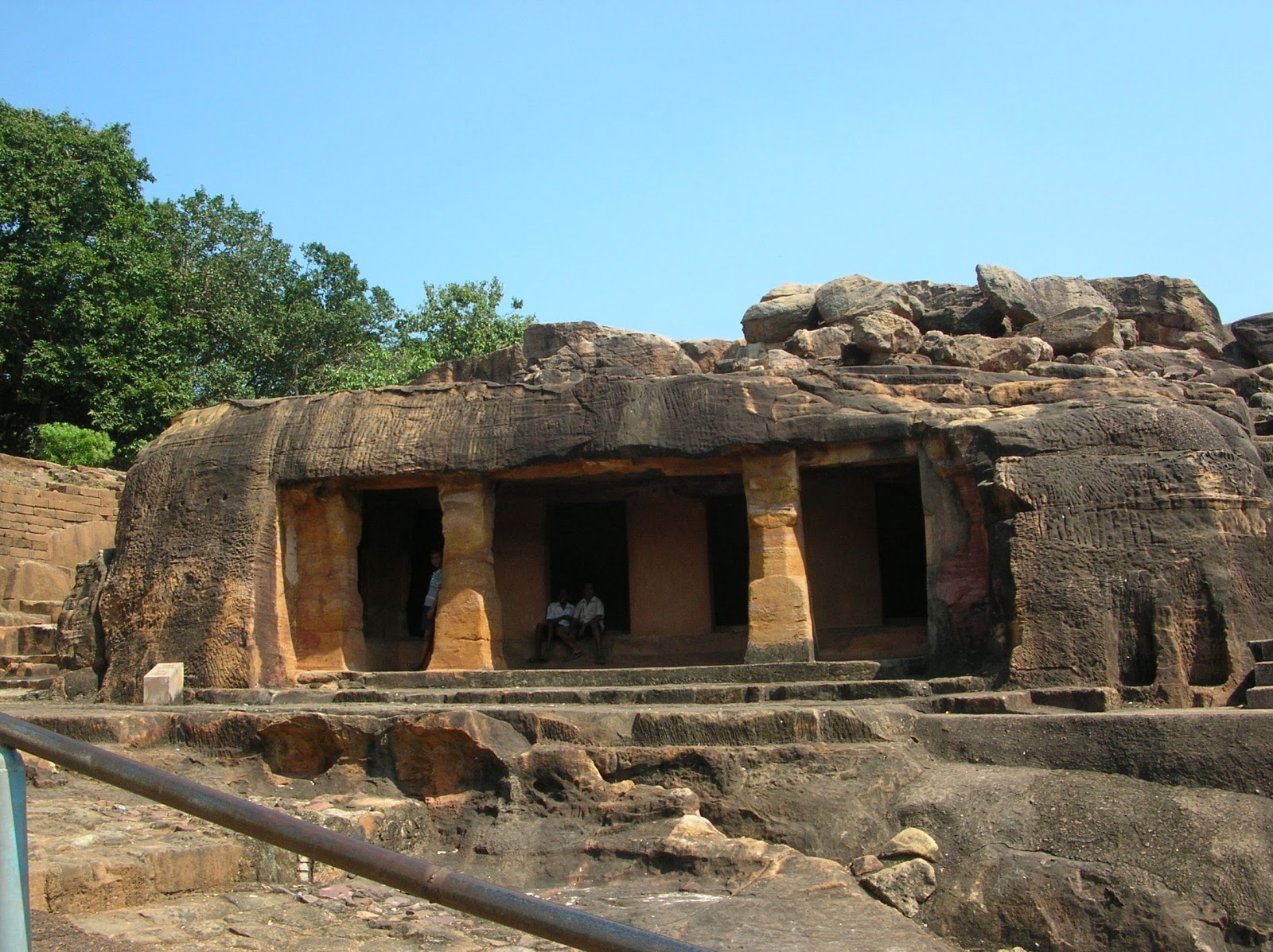
The caves of Udayagiri and Khandagiri, called lena or leṇa in the inscriptions, were dug out mostly during the reign of Kharavela for the abode of Jaina ascetics. The most important of this group is Ranigumpha in Udayagiri which is a double storeyed monastery.

The caves of Udayagiri and Khandagiri, called lena or leṇa in the inscriptions, were dug out mostly during the reign of Kharavela for the abode of Jaina ascetics. The most important of this group is Ranigumpha in Udayagiri which is a double storeyed monastery.

Unfortunately, a number of the Jaina caves on the Khandagiri side have encroachment problems, with local Brahmins turning them into Hindu shrines and covering up some of the more obvious Jain-only iconography, e.g. images of Tirthankars
Source Wikipedia, the free encyclopedia
Wednesday, 24 October 2012
Saturday, 20 October 2012

Saturday, 15 September 2012
Sunday, 26 August 2012
Mother Teresa

Mother Teresa of Calcutta,[1] born Agnes Gonxha Bojaxhiu (Albanian: [aˈɲɛs ˈɡɔɲdʒa bɔjaˈdʒiu]) and commonly known as Mother Teresa of Calcutta (26 August 1910 – 5 September 1997), was an Albanian–born Indian Roman Catholic nun. "By blood, I am Albanian. By citizenship, an Indian. By faith, I am a Catholic nun. As to my calling, I belong to the world. As to my heart, I belong entirely to the Heart of Jesus."[2] In late 2003, she was beatified, the third step toward possible sainthood. A second miracle credited to Mother Teresa is required before she can be recognized as a saint by the Catholic church.[3][4]Mother Teresa was very fluent in speaking Bengali, the local language of the people of Calcutta(Kolkata).[5]
Mother Teresa founded the Missionaries of Charity, a Roman Catholic religious congregation, which in 2012 consisted of over 4,500 sisters and is active in 133 countries. Members of the order must adhere to the vows of chastity, poverty and obedience, and the fourth vow, to give "Wholehearted and Free service to the poorest of the poor". The Missionaries of Charity at the time of her death had 610 missions in 123 countries including hospices and homes for people with HIV/AIDS, leprosy and tuberculosis, soup kitchens, children's and family counselling programmes, orphanages and schools.
For over 45 years, she ministered to the poor, sick, orphaned, and dying, while guiding the Missionaries of Charity's expansion, first throughout India and then in other countries. Her beatification by Pope John Paul II following her death gave her the title "Blessed Teresa of Calcutta".
She was the recipient of numerous honours including the 1979 Nobel Peace Prize. She refused the conventional ceremonial banquet given to laureates, and asked that the $192,000 funds be given to the poor in India. Her awards include the first Pope John XXIII Peace Prize, the Philippines-based Ramon Magsaysay Award, the Pacem in Terris Award, an honorary Companion of the Order of Australia, the Order of Merit from both the United Kingdom and the United States, Albania's Golden Honour of the Nation, honorary degrees, the Balzan Prize, and the Albert Schweitzer International Prize amongst many others.
Mother Teresa stated that earthly rewards were important only if they helped her help the world's needy. When Mother Teresa received the Nobel Peace Prize, she was asked, "What can we do to promote world peace?" She answered "Go home and love your family." In her Nobel Lecture, she said: "Around the world, not only in the poor countries, but I found the poverty of the West so much more difficult to remove. When I pick up a person from the street, hungry, I give him a plate of rice, a piece of bread, I have satisfied. I have removed that hunger. But a person that is shut out, that feels unwanted, unloved, terrified, the person that has been thrown out from society—that poverty is so hurtable [sic] and so much, and I find that very difficult." She also singled out abortion as 'the greatest destroyer of peace in the world'.
During her lifetime, Mother Teresa was named 18 times in the yearly Gallup's most admired man and woman poll as one of the ten women around the world that Americans admired most. In 1999, a poll of Americans ranked her first in Gallup's List of Most Widely Admired People of the 20th Century. In that survey, she out-polled all other volunteered answers by a wide margin, and was in first place in all major demographic categories except the very young.
Image and Source : Wikipedia, the free encyclopedia
Sunday, 12 August 2012
Indian Medals in Olympics 2012

Gagan Narang scooped India's first medal in the Olympic
Games by winning the bronze in the men's 10m air rifle.
Games by winning the bronze in the men's 10m air rifle.

Won Silver Medal, India's 2nd Medal in London
Olympics 2012 by Vijay Kumar – 25m Rapid Fire Pistol
Olympics 2012 by Vijay Kumar – 25m Rapid Fire Pistol

Saina Nehwal won herself her first ever Olympic medal
and got India their third medal in this edition.
Saina won the bronze medal playoff against
Wang Xin of China through walkover,
thereby becoming the first Indian shuttler to
win an Olympic medal.
and got India their third medal in this edition.
Saina won the bronze medal playoff against
Wang Xin of China through walkover,
thereby becoming the first Indian shuttler to
win an Olympic medal.

M C Mary Kom created history as she assured India
its fourth Olympic medal after winning her quarterfinal
boxing bout against Maroua Rahali
of Tunisia by 15-6 margin in the
women's 51 kg category.
its fourth Olympic medal after winning her quarterfinal
boxing bout against Maroua Rahali
of Tunisia by 15-6 margin in the
women's 51 kg category.

Yogeshwar Dutt won India their fifth medal of the
London Olympics, winning Bronze in the
men’s 60 kg freestyle men’s wrestling.
London Olympics, winning Bronze in the
men’s 60 kg freestyle men’s wrestling.

London Olympics 2012 wrestling 66kg Final:
Sushil Kumar loses final bout, secures silver
Sushil Kumar loses final bout, secures silver

Thursday, 21 June 2012
Ratha Yatra

Ratha Yatra (Oriya: ରଥଯାତ୍ରା) or the Car Festival is a huge Hindu festival associated with Lord Jagannath held at Puri in the state of Orissa,India.

This annual festival is celebrated on Ashad Shukla Dwitiya (second day in bright fortnight of Ashad month). In 2012 it falls on the 21st of June.[1]

As part of Rath Yatra, the idols of Lord Puri Jagannath, Lord Balabhadra and Subhadra are taken out in a procession to Gundicha Temple and remain there for nine days. Then the idols or Rath Yatra returns to Puri Jagannath temple. The return journey of Puri Jagannath Rath Yatra is known as Bahuda Yatra.
Image and Source : From Wikipedia, the free encyclopedia
Thursday, 14 June 2012
Mayapur
Mayapur (Bengali: মায়াপুর) is located on the banks of the Ganges river, at the point of its confluence with the Jalangi, near Navadvip, West Bengal, India, 130 km north of Kolkata (Calcutta). It is The Head Quarters of ISKCON and is considered a holy place by a number of other traditions within Hinduism, but is of special significance to followers of Gaudiya Vaishnavism as the birthplace of Chaitanya Mahaprabhu, regarded as a special incarnation of Krishna in the mood ofRadha. It is visited by over a million pilgrims annually.

Mayapur can be reached by boat, and more commonly by train or bus. ISKCON Kolkata operates regular bus service from Kolkata to Mayapur.[1] Frequent train service is available to Krishnanagar, Nadia from Kolkata's Sealdah Station,[2] then 18 km by auto or cycle rickshaw to Mayapur.[3]

During the visit one can see "the huge headquarters of the International Society of Krishna Consciousness (ISKCON)" and "a long stream of saffron-robed devotees chanting" the Hare Krishna mantra.[4]

Samadhi Mandir of Srila Prabhupada : A main attraction in Mayapur is Srila Prabhupada's Samadhi Mandir, a memorial to ISKCON's founder. The main shrine is surrounded by a museum depicting Srila Prabhupada's life, using fiberglass exhibits. The International Society of Krishna Consciousness is also planning to construct a garden in memory of George Harrison.[5]

Gaudiya Vaishnava temples : The headquarters of the International Society for Krishna Consciousness (ISKCON) have been located in Mayapur since the 1970s. In addition, there are a number of other Gaudiya Vaishnava organisations in Mayapur, such as theGaudiya Math. The town is heavily centred around this particular Vaishnava religious tradition, officially known as theBrahma-Madhva-Gaudiya Sampradaya, with temples devoted to Radha and Krishna or Gaura-Nitai throughout; however, there is a sizeable Muslim population in the historical centre, previously called Miyapur.
Source : From Wikipedia, the free encyclopedia
Wednesday, 6 June 2012
Transit of Venus

Diagram of transits of Venus and the angle
between the orbital planes of Venus and Earth

The 1882 transit of Venus


A Graphical presentation of the observation the of Venus Transit
from Paikpara, North Kolkata on 6-6-2012 at 7.30 IST
A transit of Venus across the Sun takes place when the planet Venus passes directly between the Sun and Earth, becoming visible against (and hence obscuring a small portion of) the solar disk. During a transit, Venus can be seen from Earth as a small black disk moving across the face of the Sun. The duration of such transits is usually measured in hours (the transit of 2012 lasted 6 hours and 40 minutes). A transit is similar to a solar eclipse by the Moon. While the diameter of Venus is more than 3 times that of the Moon, Venus appears smaller, and travels more slowly across the face of the Sun, because it is much farther away from Earth.
Transits of Venus are among the rarest of predictable astronomical phenomena.[1] They occur in a pattern that repeats every 243 years, with pairs of transits eight years apart separated by long gaps of 121.5 years and 105.5 years. The periodicity is a reflection of the fact that the orbital periods of Earth and Venus are close to 8:13 and 243:395 commensurabilities.[2][3]
The last transit of Venus was on 5 and 6 June 2012, and was the last Venus transit this century; the prior transit took place on 8 June 2004. The previous pair of transits were in December 1874 and December 1882. After 2012, the next transits of Venus will be in December 2117 and December 2125.[4][5]
Venus transits are historically of great scientific importance as they were used to gain the first realistic estimates of the size of theSolar System. Observations of the 1639 transit, combined with the principle of parallax, provided an estimate of the distance between the Sun and the Earth that was more accurate than any other up to that time. In addition, the June 2012 transit will provide scientists with a number of other research opportunities, particularly in the refinement of techniques to be used in the search for exoplanets. A transit of Venus can be safely observed by taking the same precautions used to observe the partial phases of a solar eclipse. Staring at the Sun without appropriate eye protection can quickly cause serious and often permanent eye damage.[6]
Source and Image : Wikipedia the free encyclopedia
Subscribe to:
Posts (Atom)